I. Overview: The Greyhound of the Sea
The Fin Whale (Balaenoptera physalus) is the second-largest animal ever to exist on Earth, reaching lengths of up to 85 feet (26 meters) and weighing up to 80 tons. Only the Blue Whale surpasses it in size. Despite this immense scale, the Fin Whale remains one of the ocean's most overlooked giants—a creature of extraordinary grace, speed, and vulnerability that continues to face threats ranging from ship strikes to ongoing commercial hunting.
Known as the "greyhound of the sea," Fin Whales are built for speed, capable of reaching bursts up to 23 mph (37 km/h), making them one of the fastest cetaceans. They are migratory, traveling thousands of miles between feeding grounds in cold, nutrient-rich polar and temperate waters and warmer breeding areas. Their calls—low-frequency pulses that can travel across entire ocean basins—are among the most powerful sounds produced by any animal on Earth, reaching 184-186 decibels.
Yet for all their physical grandeur, Fin Whales remain "second place" in conservation attention. They are not as iconic as Humpback Whales, not as critically endangered as North Atlantic Right Whales, and not as massive as Blue Whales. This relative invisibility has real consequences: Fin Whales are still hunted commercially, struck by ships at alarming rates, and face cumulative pressures from noise pollution, entanglement, and climate change—all while receiving a fraction of the conservation resources dedicated to their more famous cousins.
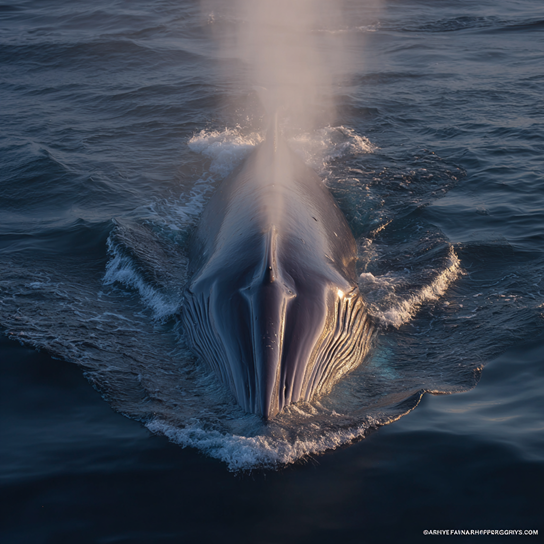
The Fin Whale's streamlined body and distinctive asymmetrical coloration make it one of the ocean's most elegant swimmers.
II. Biology and Behavior
Physical Characteristics
Fin Whales are sleek, streamlined baleen whales with a distinctive V-shaped head and a prominent dorsal fin set far back on the body (about two-thirds of the way down the back). Their most unique feature is asymmetrical coloration: the right side of the jaw is white, while the left side is dark gray. Scientists believe this coloring may aid in feeding by startling prey during their distinctive side-lunge feeding behavior.
Males can reach 75 feet (23 m), while females are slightly larger, averaging 79 feet (24 m). They have 260-480 baleen plates on each side of their mouth, which they use to filter enormous quantities of krill, small fish (such as herring, capelin, and sand lance), and crustaceans from the water.
Behavior and Diet
Fin Whales are fast, powerful swimmers that feed by engulfing massive amounts of water and prey, then forcing the water out through their baleen plates. They often employ "lunge feeding," accelerating rapidly toward concentrations of prey with their mouths open. This behavior is energy-intensive but highly effective in areas with dense prey aggregations.
Unlike some baleen whales that form tight social bonds, Fin Whales are typically solitary or found in small, loose groups of 2-7 individuals. However, they have been observed gathering in larger feeding aggregations (up to 100 individuals) in particularly rich feeding areas.
Vocalizations and Communication
Fin Whales produce some of the loudest and lowest-frequency sounds in the animal kingdom. Their calls consist of 20 Hz pulses (far below the range of human hearing without specialized equipment) that can travel for hundreds of miles underwater. These vocalizations are thought to play roles in long-distance communication, mate attraction, and possibly echolocation or environmental sensing.
However, these same low frequencies overlap significantly with the noise produced by commercial shipping, creating a "wall of sound" that may interfere with Fin Whale communication, navigation, and foraging. This acoustic masking is an invisible but pervasive threat—one that is difficult to measure but likely profound in its impact on a species that evolved to "hear" across ocean basins.
Reproduction and Lifespan
Fin Whales reach sexual maturity at 6-12 years of age. Females give birth to a single calf after an 11-12 month gestation period. Calves are nursed for 6-7 months and are weaned at about 20 feet in length. The interval between births is typically 2-3 years. Fin Whales can live for 80-90 years, though few individuals today reach this age due to anthropogenic threats.
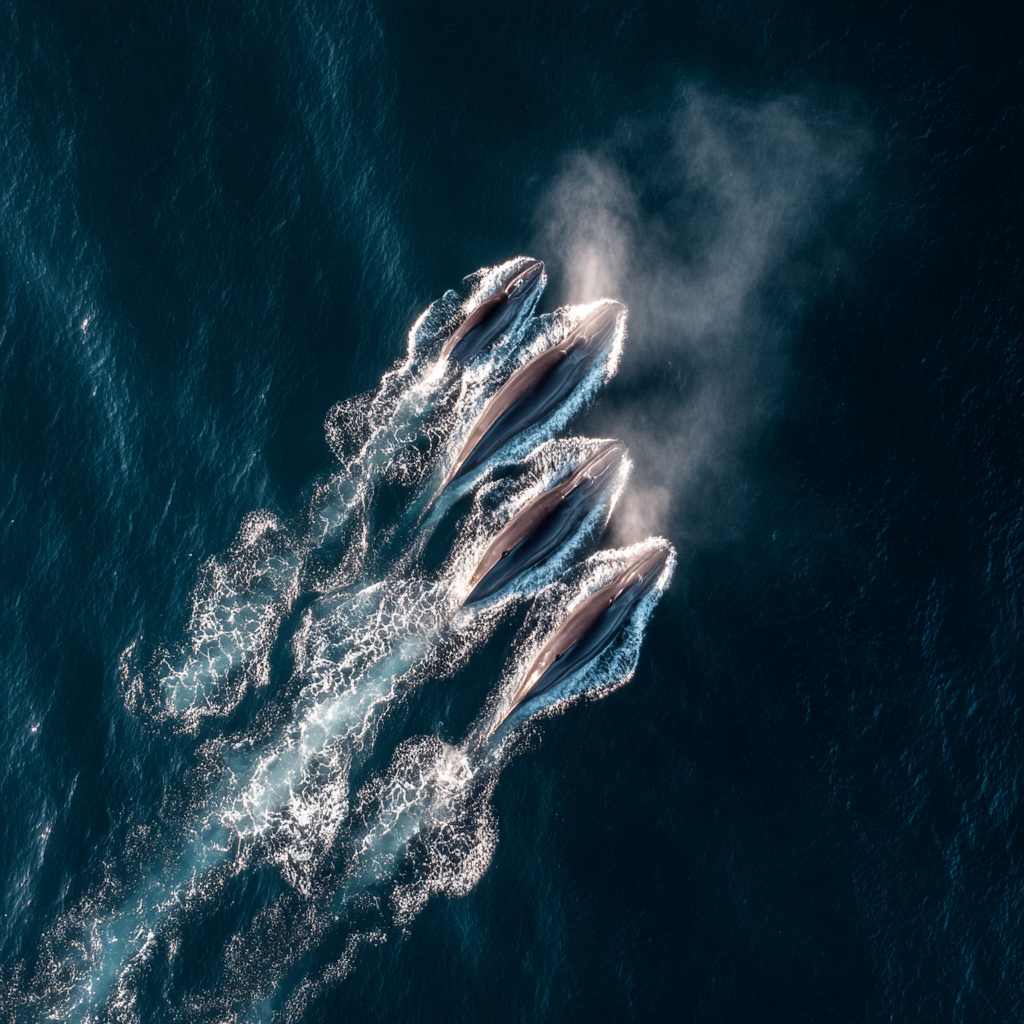
Fin Whales surface to breathe, revealing their distinctive tall blow and sleek dorsal fin.
III. Threats: The Invisible Slaughter
Ship Strikes: The Silent Killer
Ship strikes are the leading cause of death for Fin Whales in many regions, particularly in areas with heavy maritime traffic such as the Mediterranean Sea, U.S. East and West Coasts, and major shipping lanes worldwide. Fin Whales are particularly vulnerable to ship strikes because:
- Speed: Despite being fast swimmers, Fin Whales often feed in deep water near the surface and may not detect or react quickly enough to avoid fast-moving vessels.
- Acoustic Masking: Ship noise drowns out their ability to hear approaching vessels.
- Feeding Behavior: When lunge-feeding or focused on prey, they are less aware of their surroundings.
- Cryptic Presence: They do not breach or display as dramatically as Humpback Whales, making them harder for ship captains to spot and avoid.
In the Mediterranean—a critical feeding area—ship strikes are the primary cause of Fin Whale mortality. The Pelagos Sanctuary, a marine protected area specifically created to protect cetaceans, is bisected by some of the busiest shipping lanes in the world. Studies have documented that Fin Whales in this region show ship-avoidance behaviors, but avoidance is not always possible, especially at night or when vessels travel at high speeds.
While some areas have implemented voluntary or mandatory vessel speed restrictions (such as seasonal 10-knot speed limits off the U.S. East Coast), compliance is inconsistent, and many critical habitats remain unprotected. The reality is stark: we are killing Fin Whales not out of malice, but out of indifference—by moving cargo and goods across the ocean as if the animals don't exist.
Noise Pollution: Drowning in Sound
Commercial shipping, naval sonar, seismic surveys for oil and gas exploration, and underwater construction create a constant, pervasive cacophony of low-frequency noise that overlaps with the communication frequencies used by Fin Whales. This "ocean noise pollution" has increased dramatically over the past century, particularly in the 10-500 Hz range—precisely where Fin Whales communicate.
The impacts are insidious and cumulative:
- Communication Disruption: Fin Whales may be unable to hear each other's calls, disrupting mating, navigation, and social cohesion.
- Behavioral Changes: Studies show that Fin Whales alter their calling behavior, stop feeding, or flee areas with high noise levels—sacrificing access to critical feeding grounds.
- Chronic Stress: Prolonged exposure to noise pollution may cause physiological stress, weakening immune systems and reducing reproductive success.
- Masking of Environmental Cues: Noise may prevent whales from detecting predators, prey, or environmental hazards like approaching ships.
Unlike ship strikes, noise pollution leaves no visible scars. But the toll it takes—on individual health, population dynamics, and the whales' ability to navigate their world—may be just as deadly.
Entanglement in Fishing Gear
Fin Whales can become entangled in commercial fishing gear, including gillnets, longlines, and pot/trap lines. While entanglement is less common for Fin Whales than for species like North Atlantic Right Whales (due to Fin Whales' offshore habitat and deeper diving behavior), it remains a documented threat. Entangled whales may carry gear for extended periods, causing injury, infection, reduced mobility, and eventual death from starvation or drowning.
Climate Change and Ecosystem Disruption
Climate change is altering the distribution, abundance, and timing of Fin Whale prey. Warming ocean temperatures, ocean acidification, and shifts in oceanographic conditions (such as changes in upwelling patterns) affect krill and fish populations that Fin Whales depend on. These changes may force whales to travel farther to find food, expend more energy, and face increased competition with fisheries targeting the same prey species.
Additionally, as sea ice retreats and shipping lanes expand into previously inaccessible Arctic and sub-Arctic waters, Fin Whales may face new threats from increased vessel traffic and industrial activity in regions that were once refuges.
Contaminants and Pollutants
Fin Whales accumulate persistent organic pollutants (POPs), heavy metals (such as mercury and cadmium), and microplastics through their diet. While Fin Whales may accumulate lower levels of some contaminants than toothed whales (due to their lower trophic position as filter feeders), these toxins can still affect immune function, reproductive health, and calf survival. The long-term, cumulative effects of these contaminants—especially in combination with other stressors like noise and ship strikes—remain poorly understood but are likely significant.
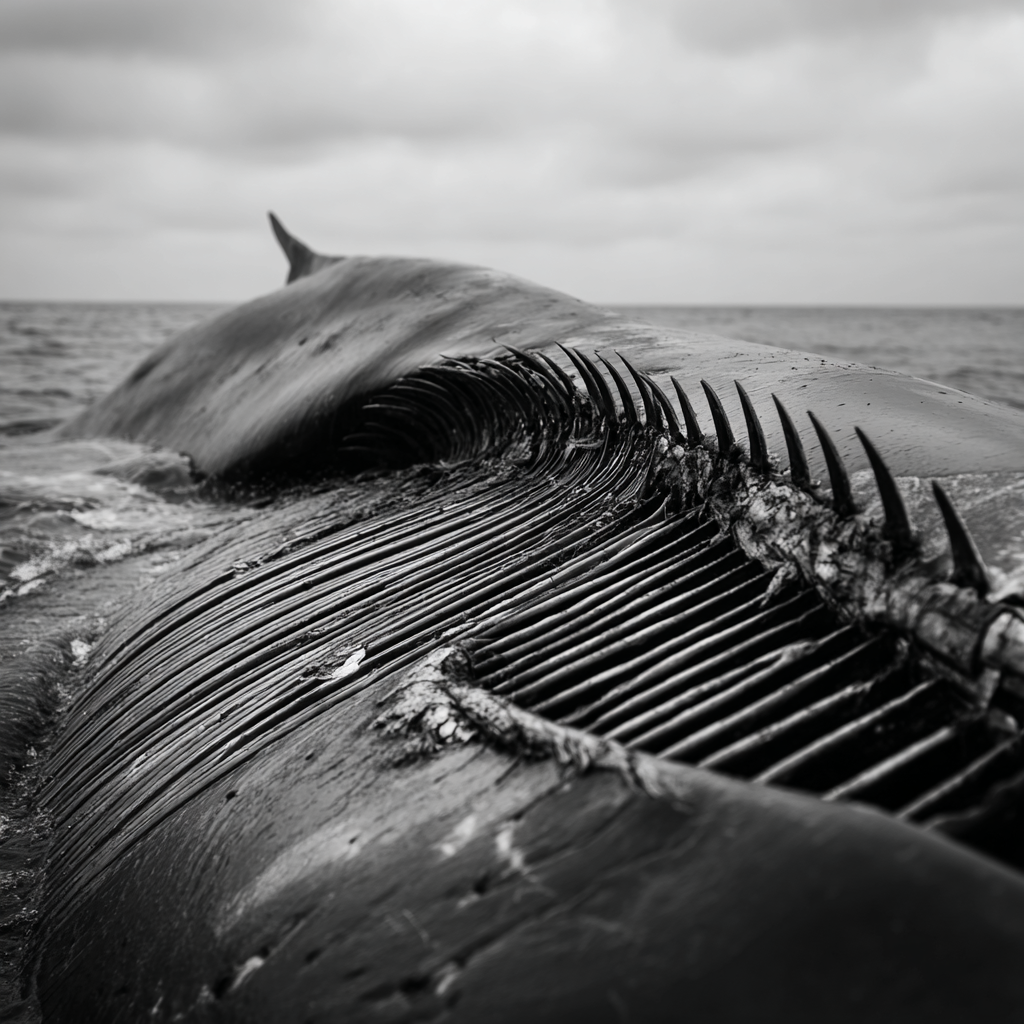
The intersection of shipping lanes and whale habitat creates deadly consequences for Fin Whales worldwide.
IV. Whaling: The Hunt That Refuses to End
Historical Context: Industrial Slaughter
The Fin Whale was one of the primary targets of 20th-century industrial whaling. Faster and more elusive than the slow-moving Right Whales and Bowheads hunted in earlier centuries, Fin Whales became economically viable prey only with the invention of explosive harpoons and steam-powered catcher boats in the late 1800s.
Between 1904 and 1979, an estimated 725,000 Fin Whales were killed in the Southern Hemisphere alone. In the North Atlantic, tens of thousands more were slaughtered. Peak kills occurred in the 1950s and 1960s, with over 30,000 Fin Whales killed per year globally. By the time the International Whaling Commission (IWC) imposed a moratorium on commercial whaling in 1986, Fin Whale populations had been reduced to a fraction of their historic numbers.
Today: Iceland's Defiance and the Politics of Extinction
Iceland's 2024 Decision: A Conservation Disaster
In 2024, Iceland made global headlines by authorizing a five-year whaling quota allowing the killing of up to 209 Fin Whales (and 217 Minke Whales) between 2024-2029. This decision came after Iceland had signaled in 2022-2023 that commercial whaling would end by 2024 due to declining profitability and public opposition. The reversal represents a stunning blow to conservation efforts and international norms.
Why This Matters:
- Vulnerable Status: The IUCN lists Fin Whales as Vulnerable, meaning they face a high risk of extinction in the wild. Killing hundreds of individuals from an already depleted population undermines decades of recovery efforts.
- No Market Demand: There is virtually no domestic market for whale meat in Iceland. The hunted whales are exported primarily to Japan, where demand has been steadily declining. In 2023, exports of Icelandic whale products to Japan dropped to their lowest level in over a decade.
- Public Opposition: A 2023 poll found that 51% of Icelanders oppose whaling. A 2024 poll found that 40% believe whaling weakens Iceland's international trade position. The hunt is deeply unpopular domestically and internationally.
- Animal Welfare Violations: In 2023, independent observers documented that whales killed by Iceland's whaling fleet suffered prolonged, agonizing deaths that violated Iceland's own animal welfare laws. One whale took over two hours to die after being struck. Despite this, the government authorized the hunt to continue.
Iceland's whaling is economically marginal. There is virtually no domestic market for whale meat in Iceland itself. The primary buyer has been Japan, but even that market is collapsing. A 2023 poll found that 51% of Icelanders oppose whaling. A 2024 poll found 40% of Icelanders believe whaling weakens Iceland's international trade position.
The hunt continues not because it's profitable or popular, but because one company—Hvalur hf, run by billionaire Kristján Loftsson—has political influence and a export market in Japan. This is conservation failure at the policy level: a vulnerable species hunted for a product nobody wants, by a country whose own citizens oppose it.
The Cruelty Factor
Iceland uses explosive-tipped harpoons fired from harpoon guns. These weapons are designed to hit the whale in the head and explode, but investigations have revealed significant animal welfare violations. In 2023, independent observers documented prolonged, painful deaths that violated Iceland's own animal welfare laws. One whale suffered for hours before dying. The Icelandic Food and Veterinary Authority found the hunt "incompatible with animal welfare laws."
Despite this, the hunt was resumed and expanded. Conservation organizations worldwide have condemned the decision as "a disaster for wildlife on an already damaged planet."